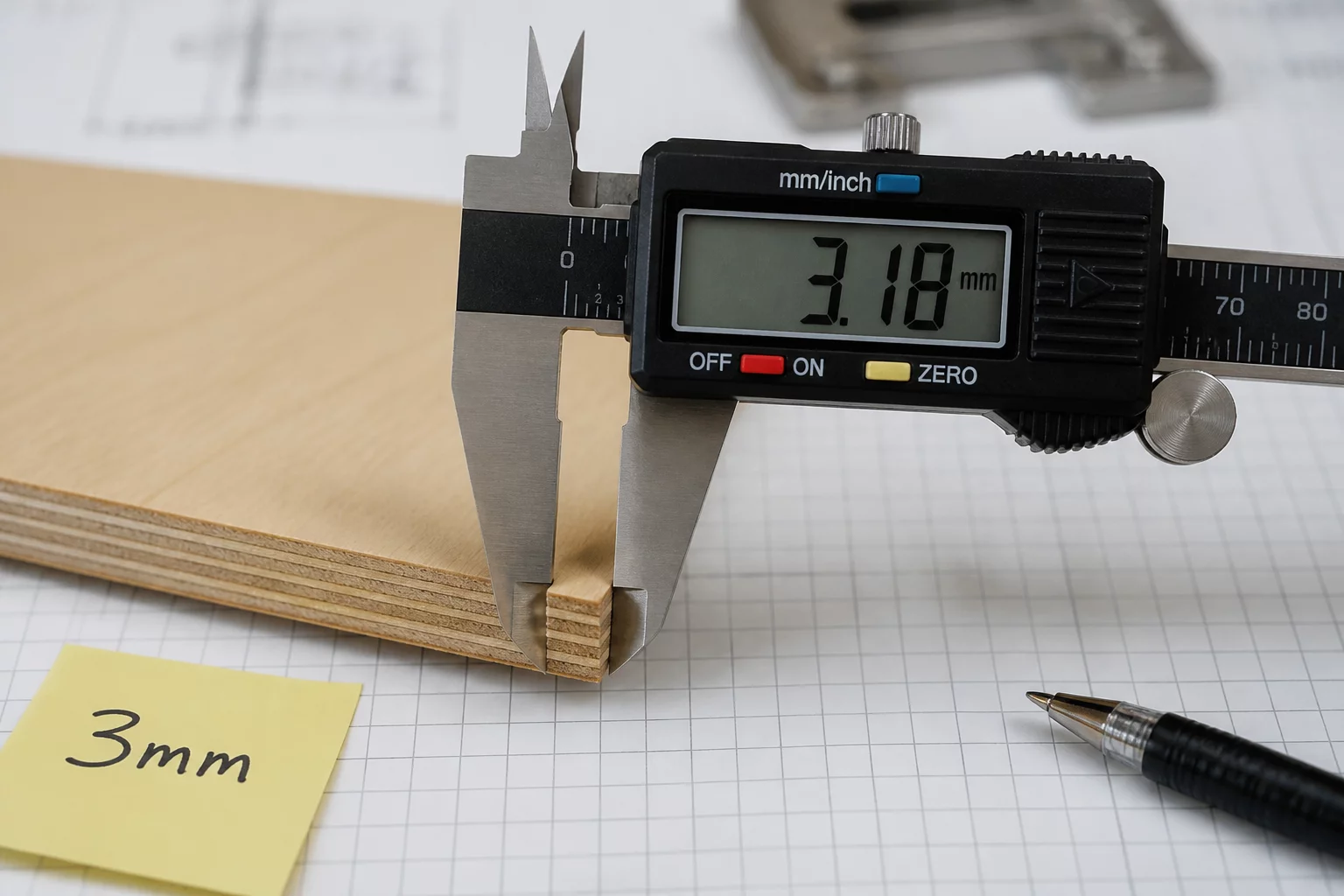
Why Nominal Thickness Was Not the Whole Story
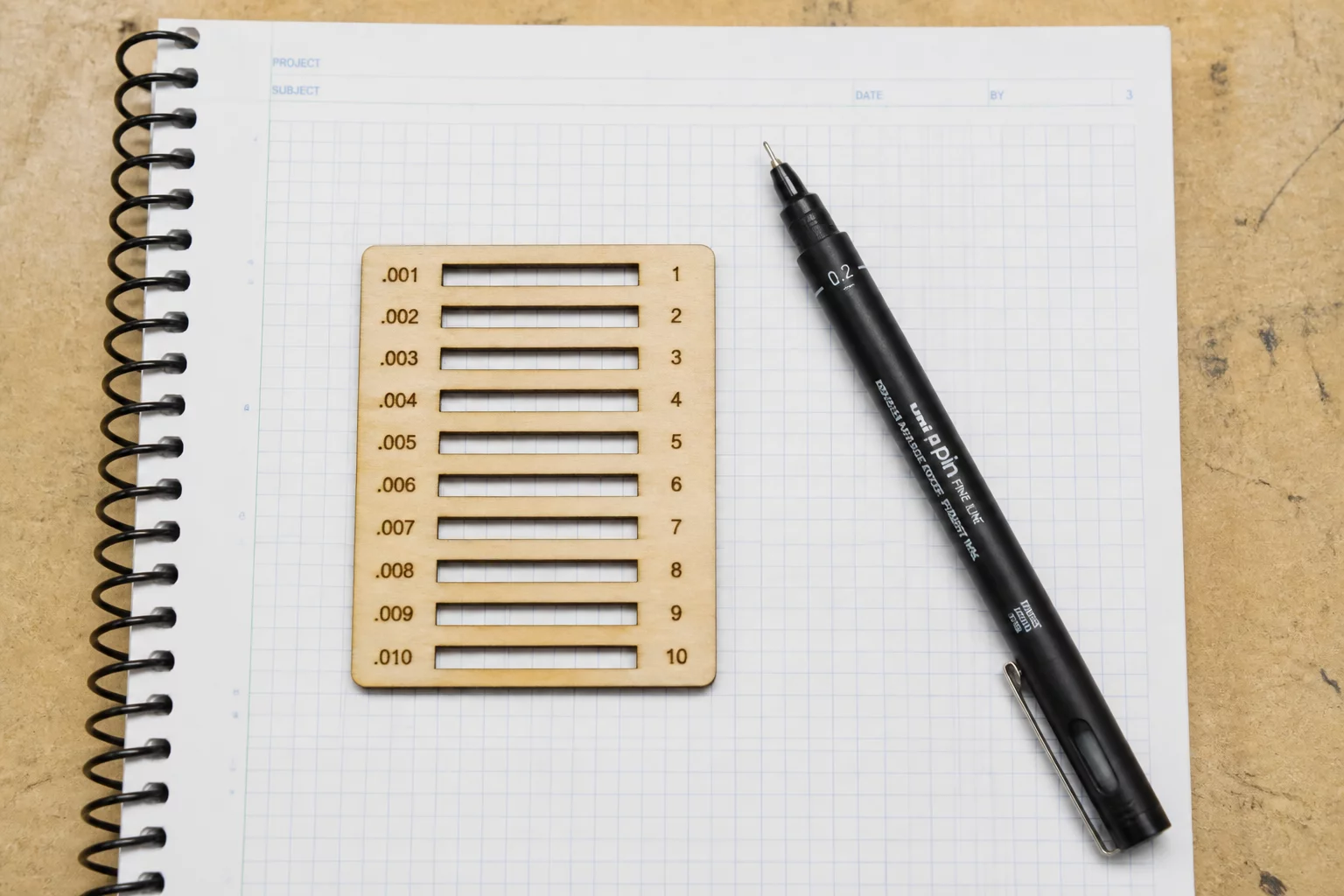
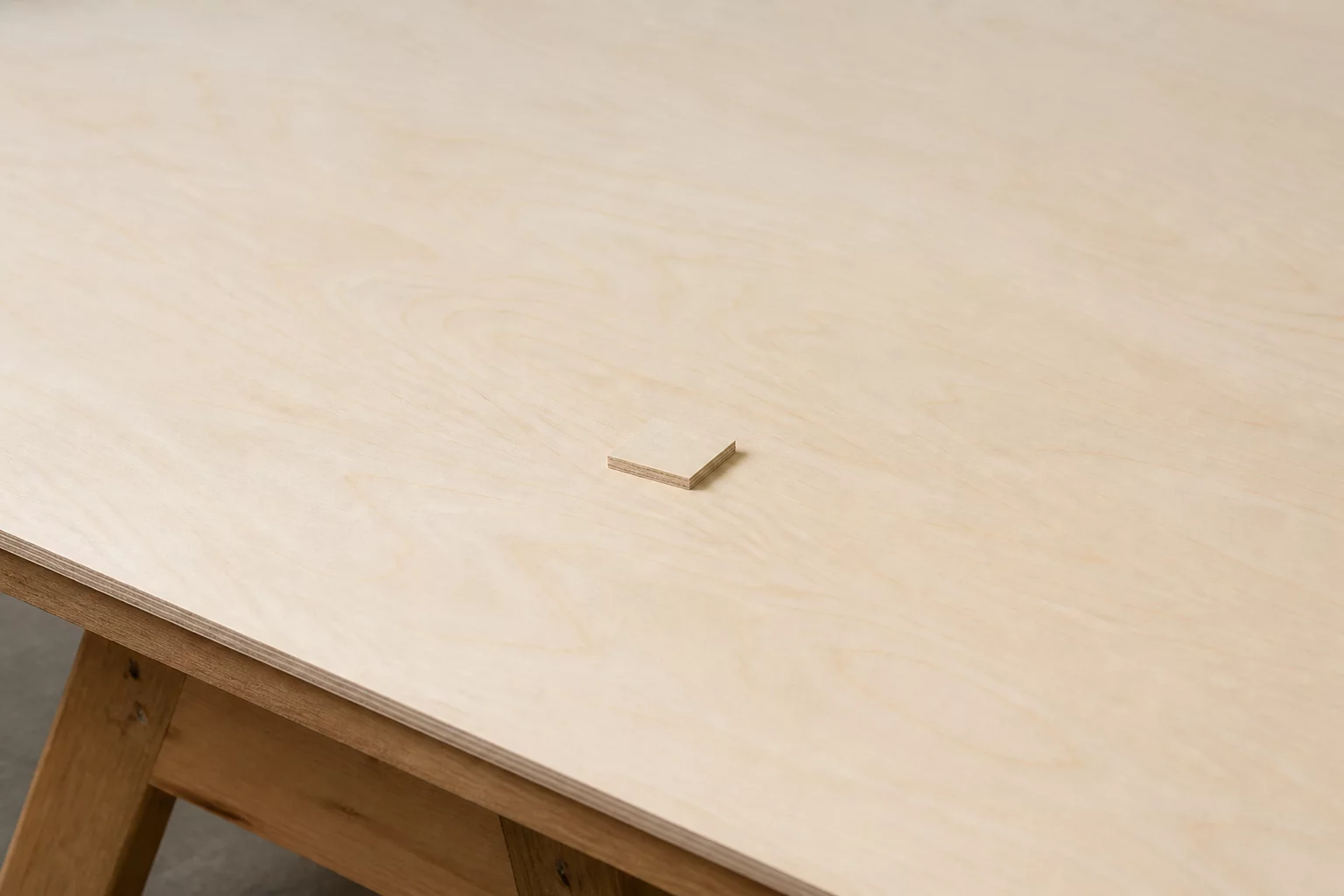
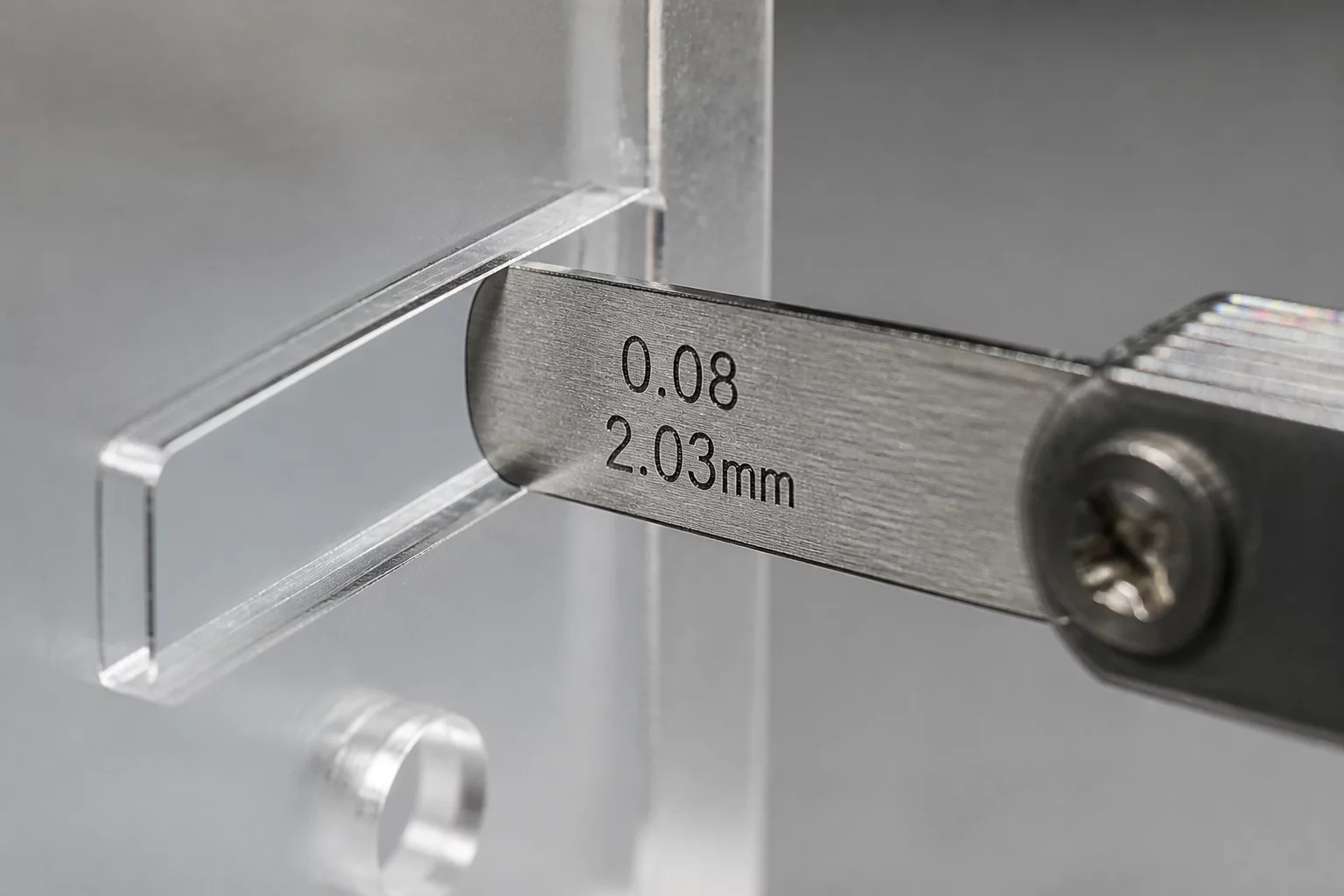
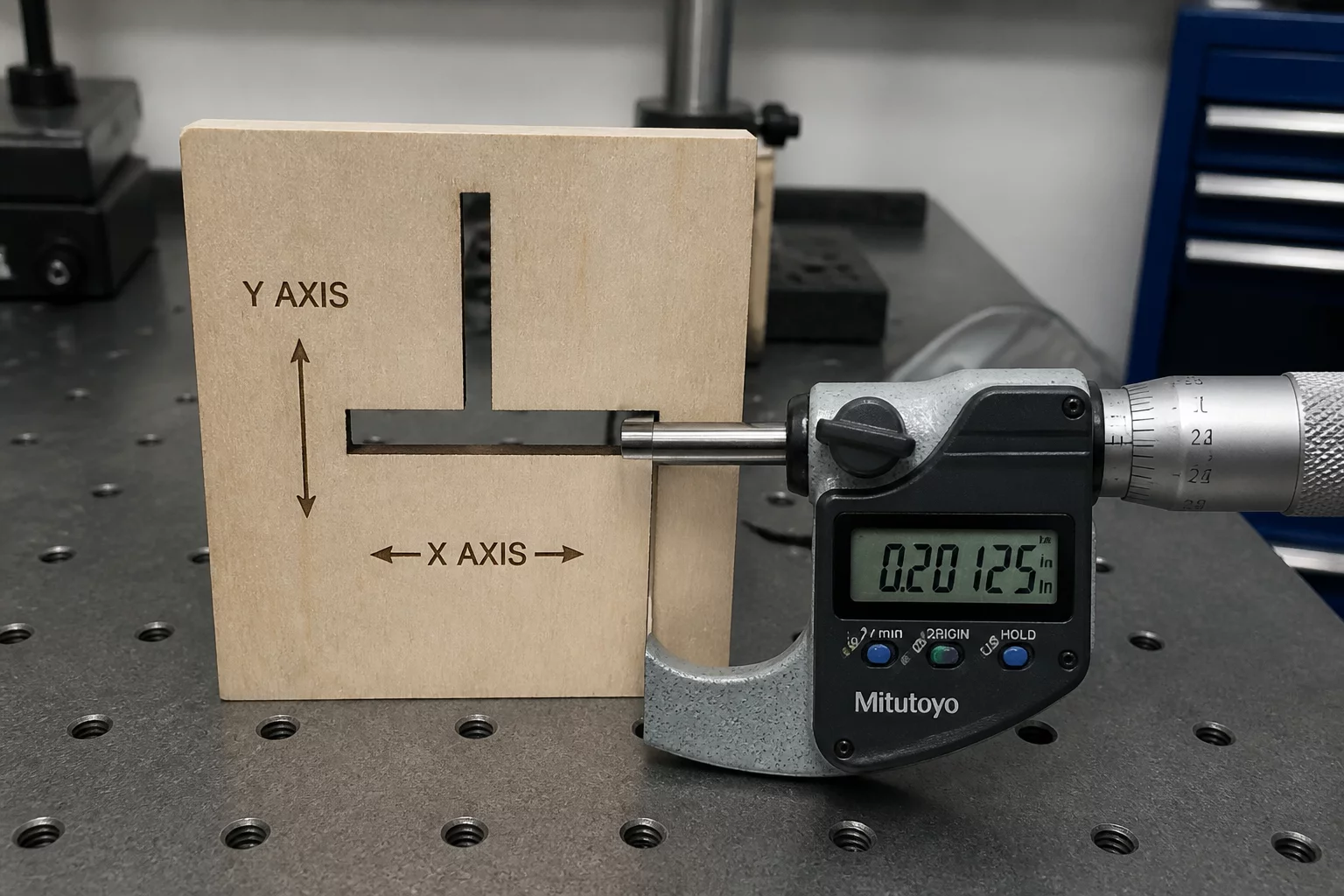
Relying solely on sheet labels often results in sloppy joins or cracked tabs. Discover how caliper measurement standards reveal real caliper tolerances before cutting.
Comprehensive calibration protocols, beam width equations, and step-by-step test matrix guides for reliable laser slot fitting.
Achieving friction-fit precision in laser cutting requires understanding kerf geometry, optical focal divergence, and material batch dynamics. Our methodology documentation breaks down controlled calibration procedures, test coupon evaluation, and verified LightBurn workflows.
Explore our step-by-step technical guides below to standardize your cut setups, eliminate loose joints, and optimize production yields without wasting full-size stock.
Relying solely on sheet labels often results in sloppy joins or cracked tabs. Discover how caliper measurement standards reveal real caliper tolerances before cutting.
Why theoretical kerf tables fail and how interactive LightBurn fit tests resolve beam width variables.
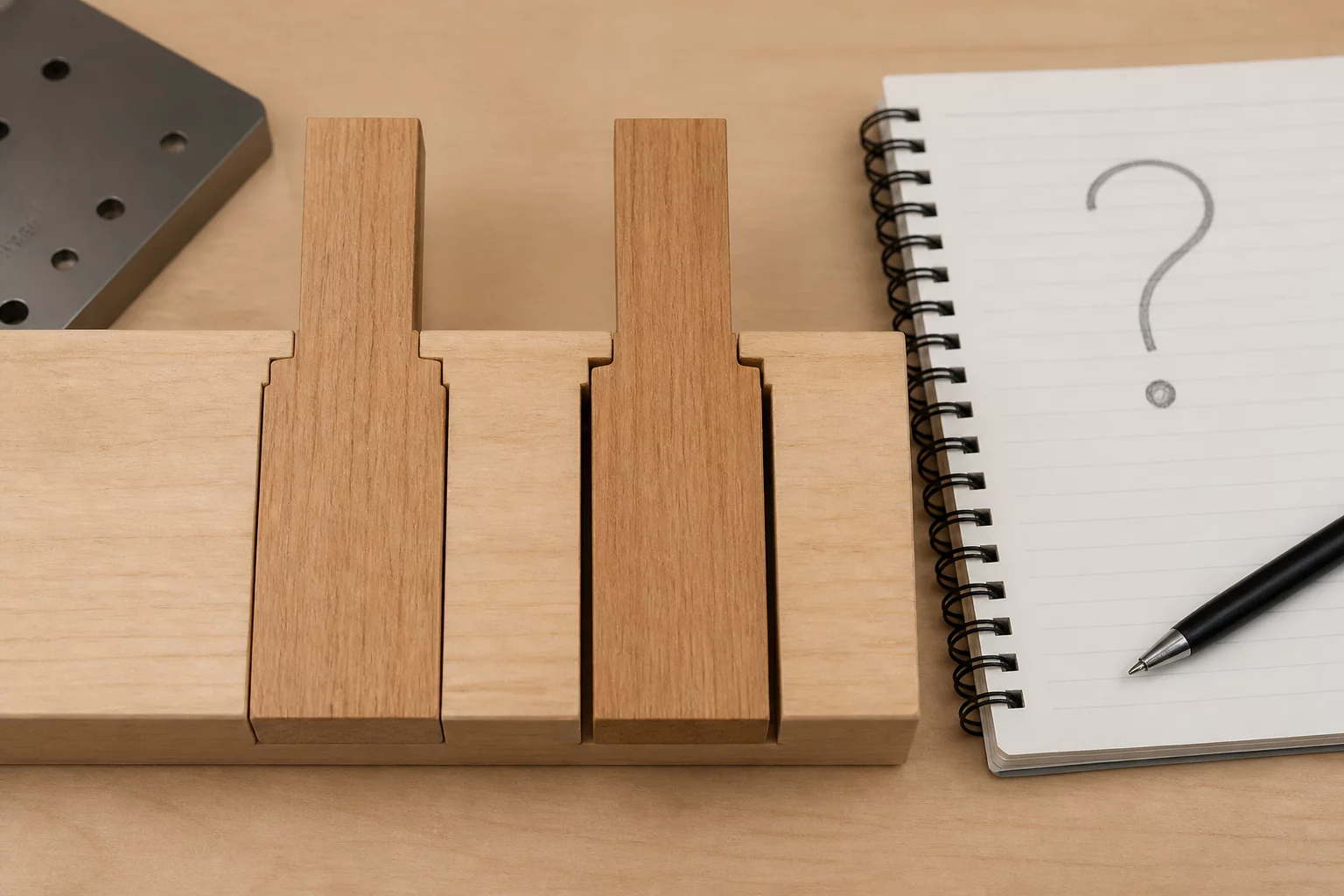
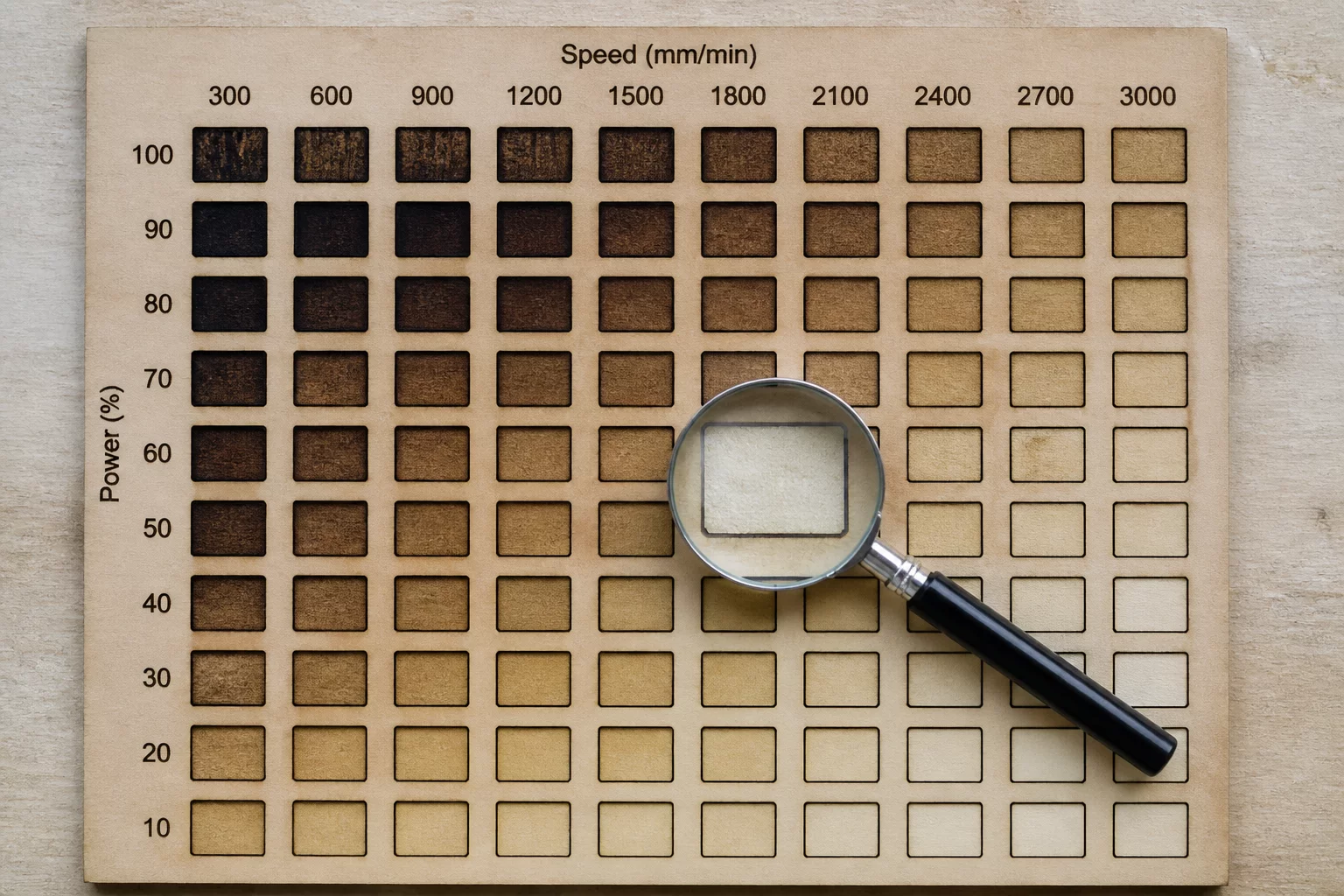
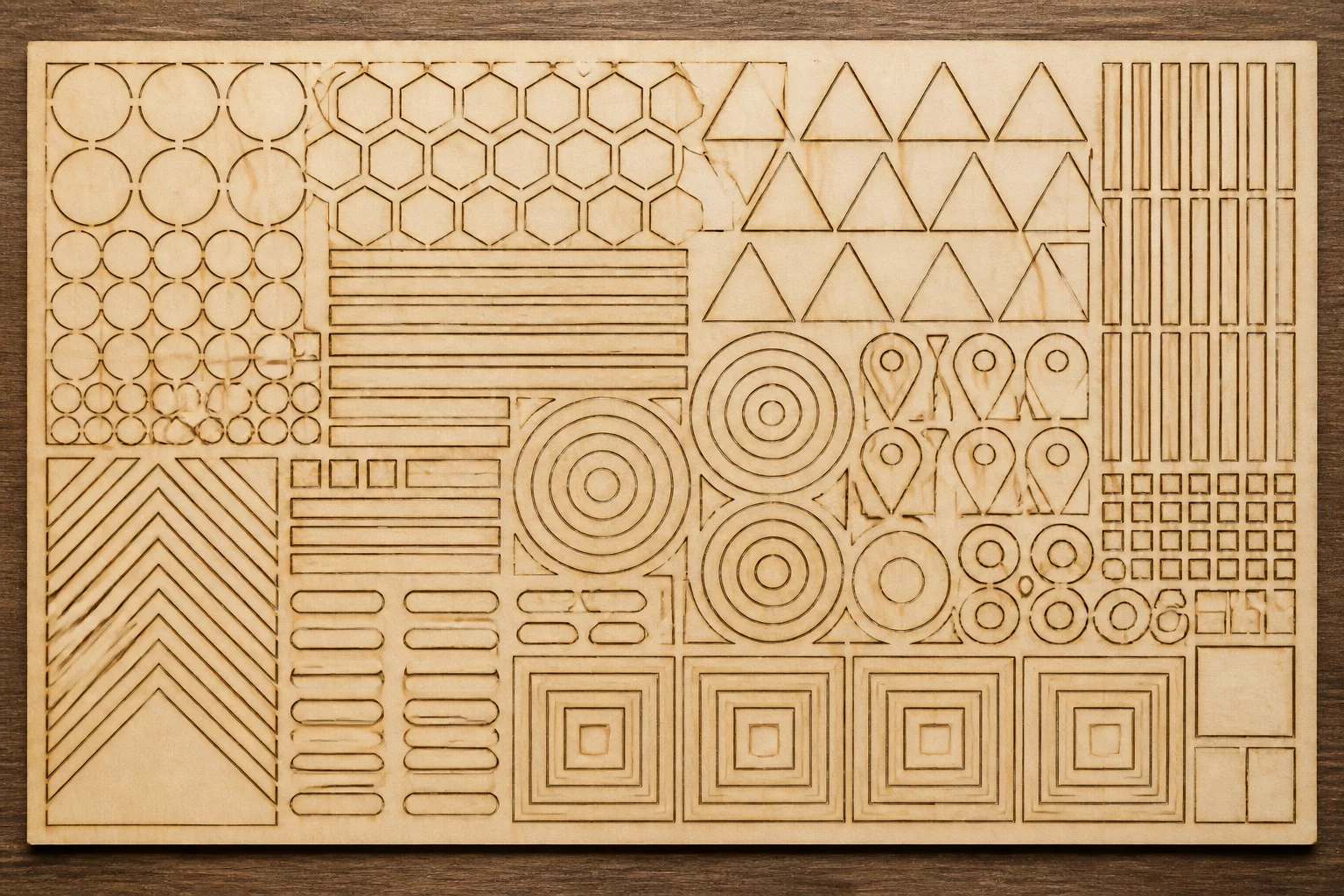
Running lightweight mini-matrix test cuts protects costly stock and validates slot widths in advance.
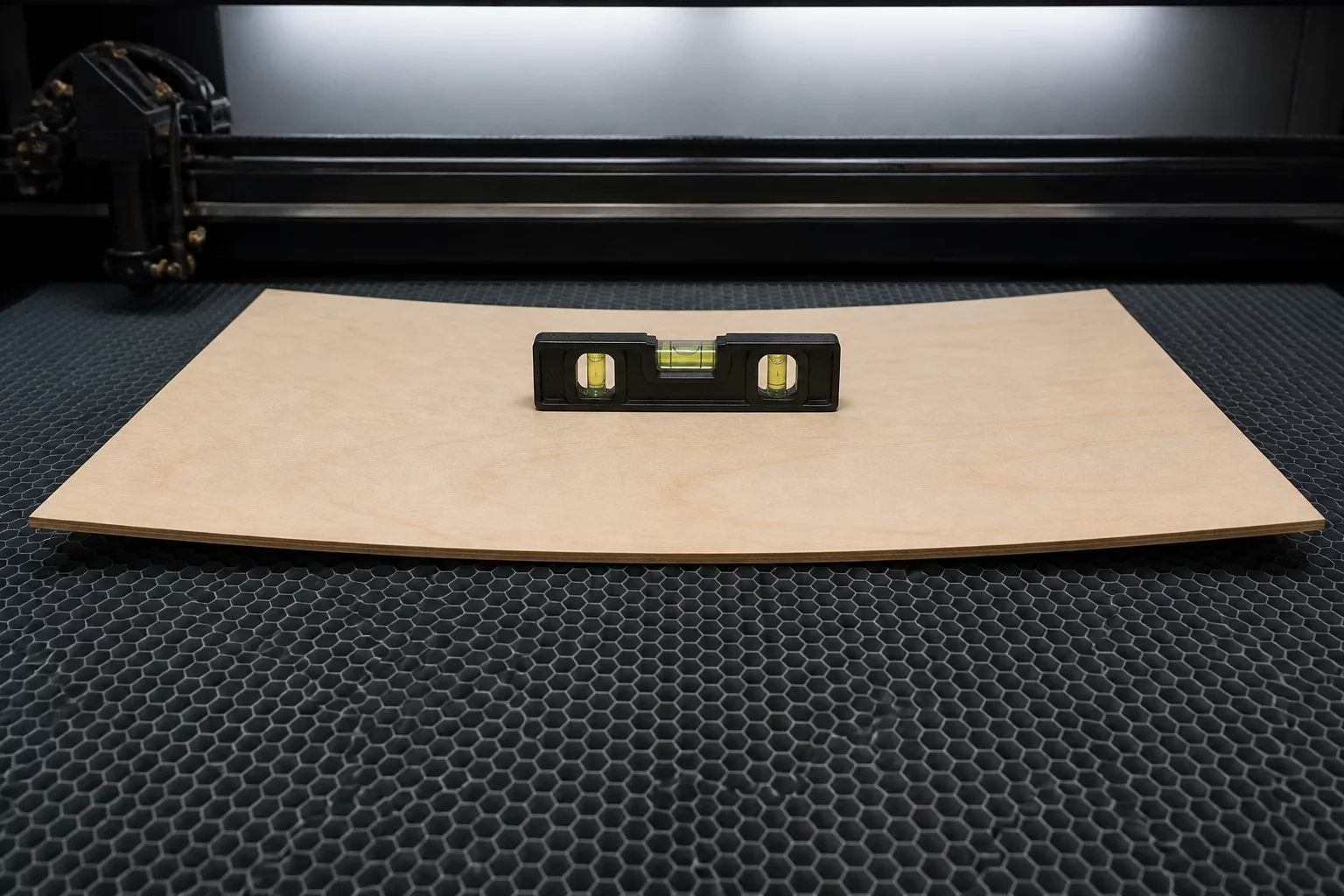
Diagnosing bed leveling drift, thermal tube drop-off, and surface unflatness when readings deviate.
Step-by-step ten-cut block test methodology to calculate exact laser kerf down to the hundredth of a millimeter.
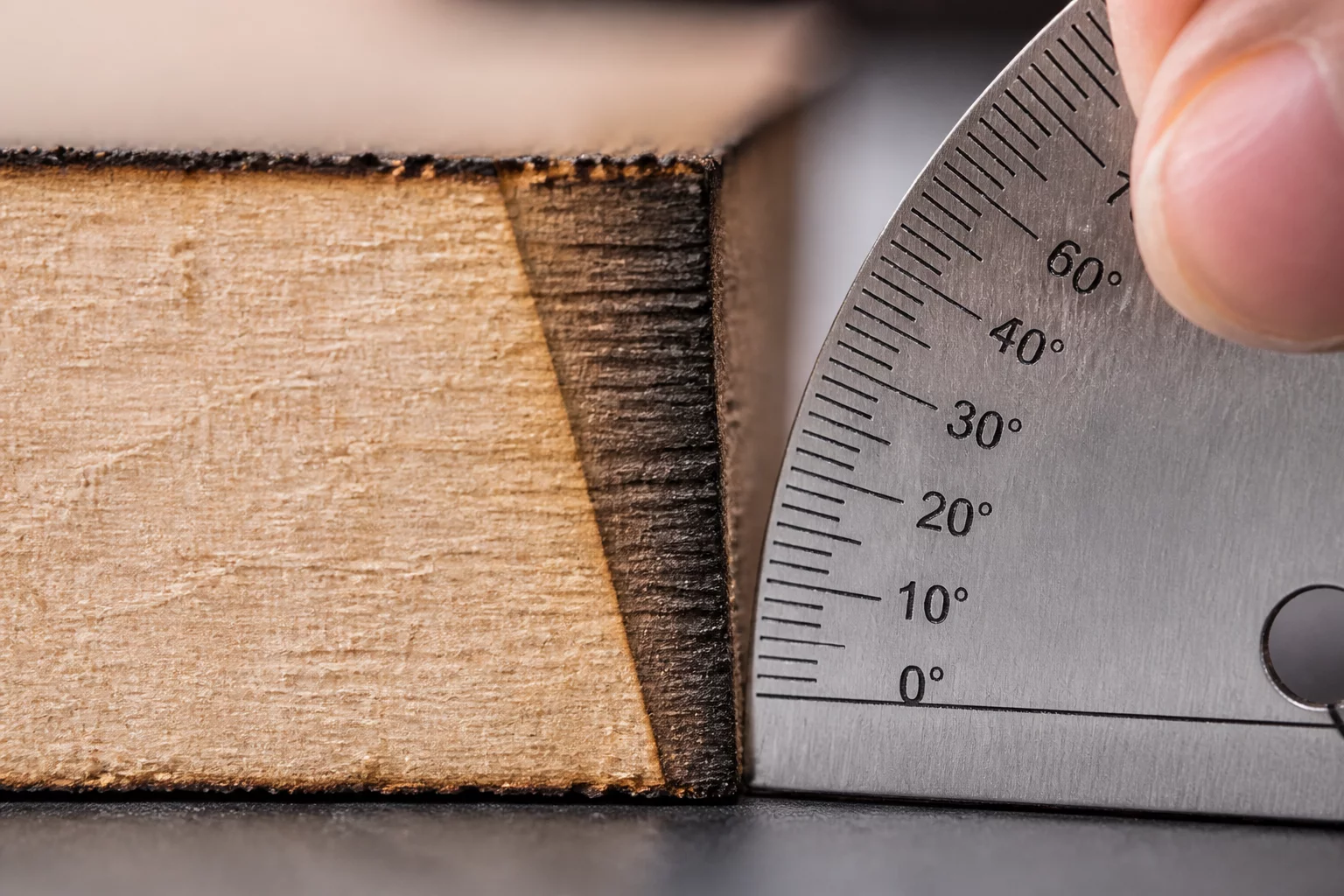
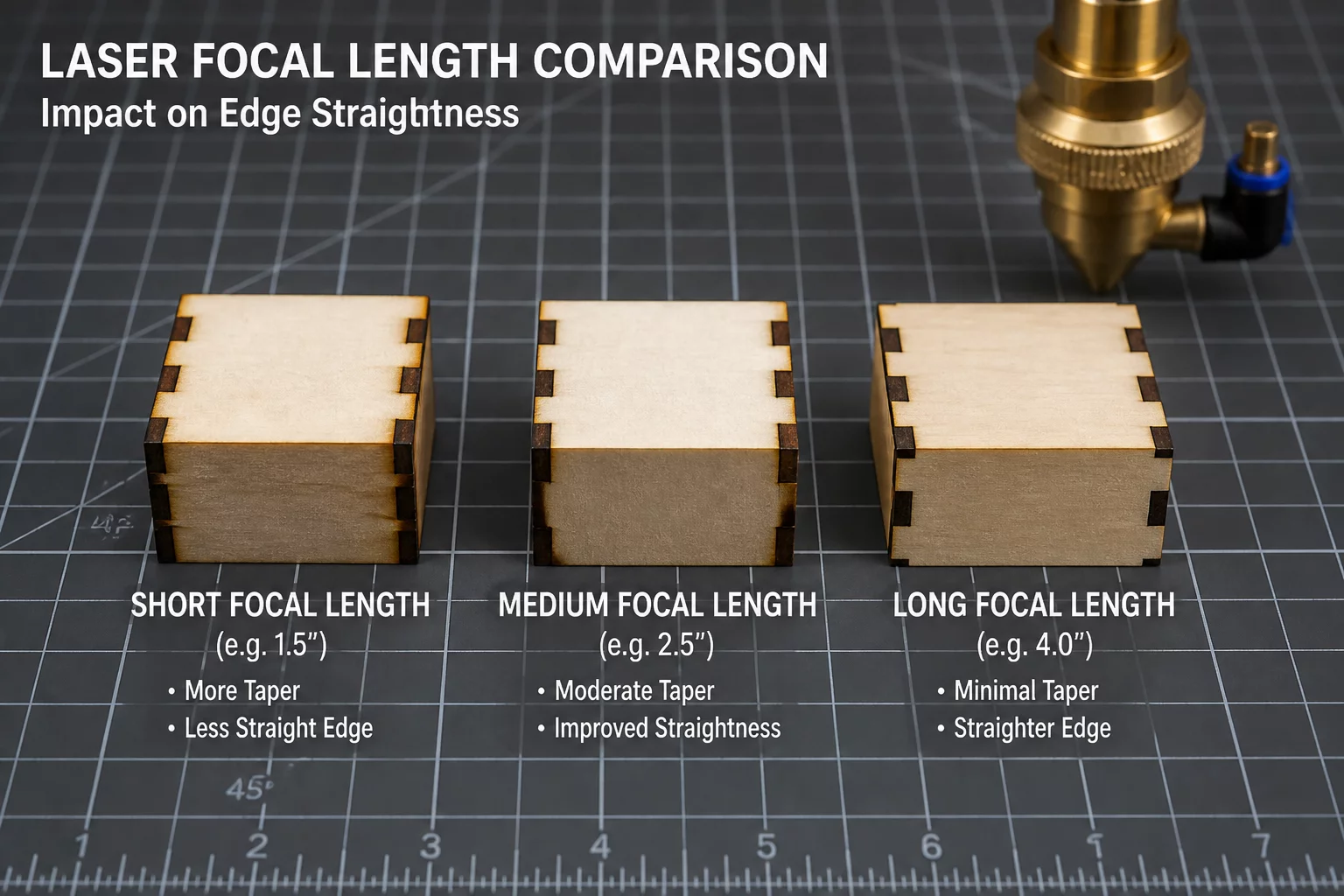
Evaluating hourglass beam profiles and adjusting focal planes to avoid tapered edges on thick acrylic.
How duty cycles and travel feed rates directly shift the effective burn track width across materials.
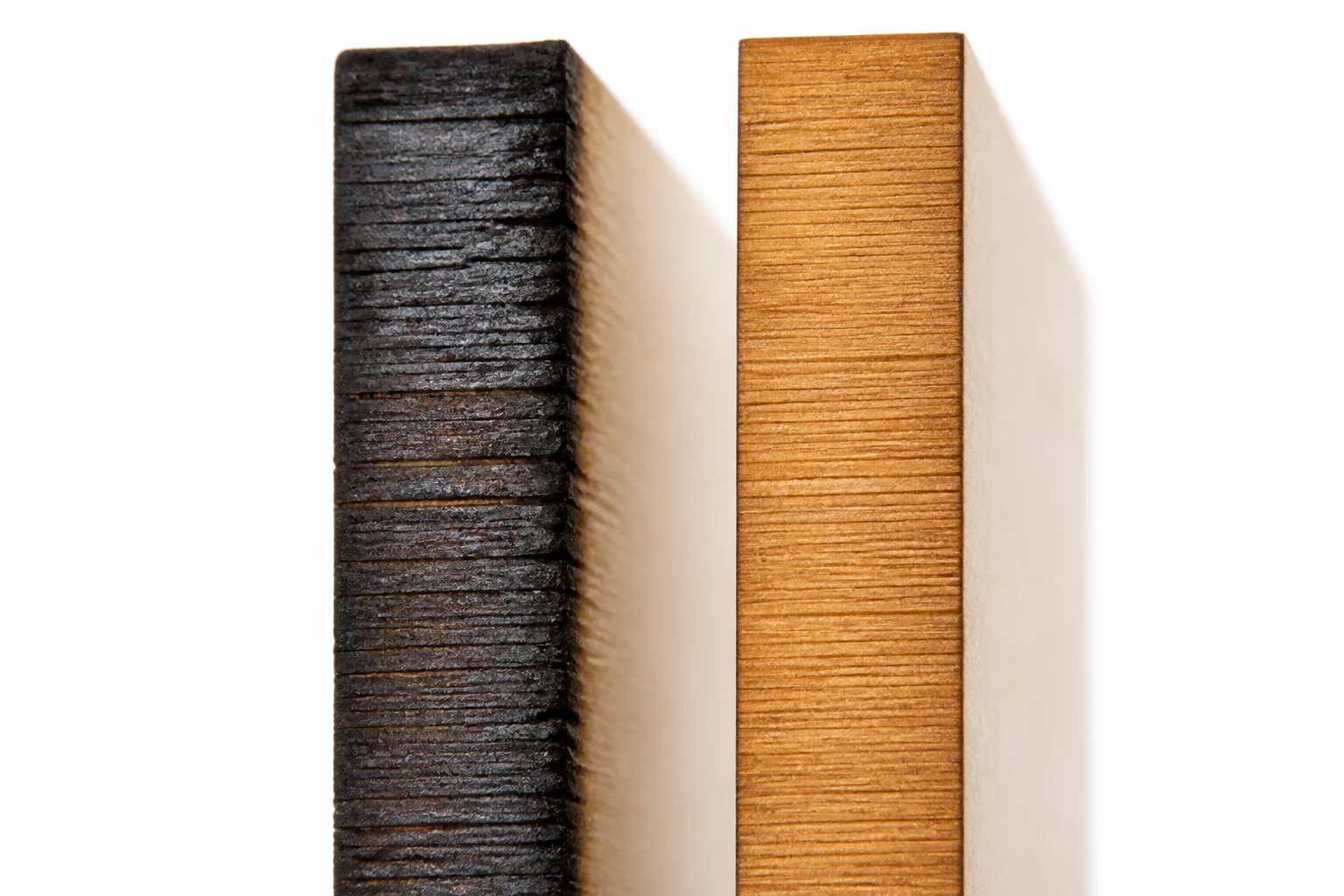
High pressure vs gentle coaxial flow: vapor clearing mechanics that influence charring and kerf expansion.
Uncovering asymmetry between X-axis gantry acceleration and Y-axis rail resistance during slot cutting.
Selecting between 1.5-inch, 2.0-inch, and 2.5-inch ZnSe optics to balance waist diameter against depth of field.
How humidity shifts Baltic birch plywood thickness and why hold-down pins are critical during fit validation.
Calculating minimum wall thickness between adjacent cut paths to prevent thermal deformation and breakout.
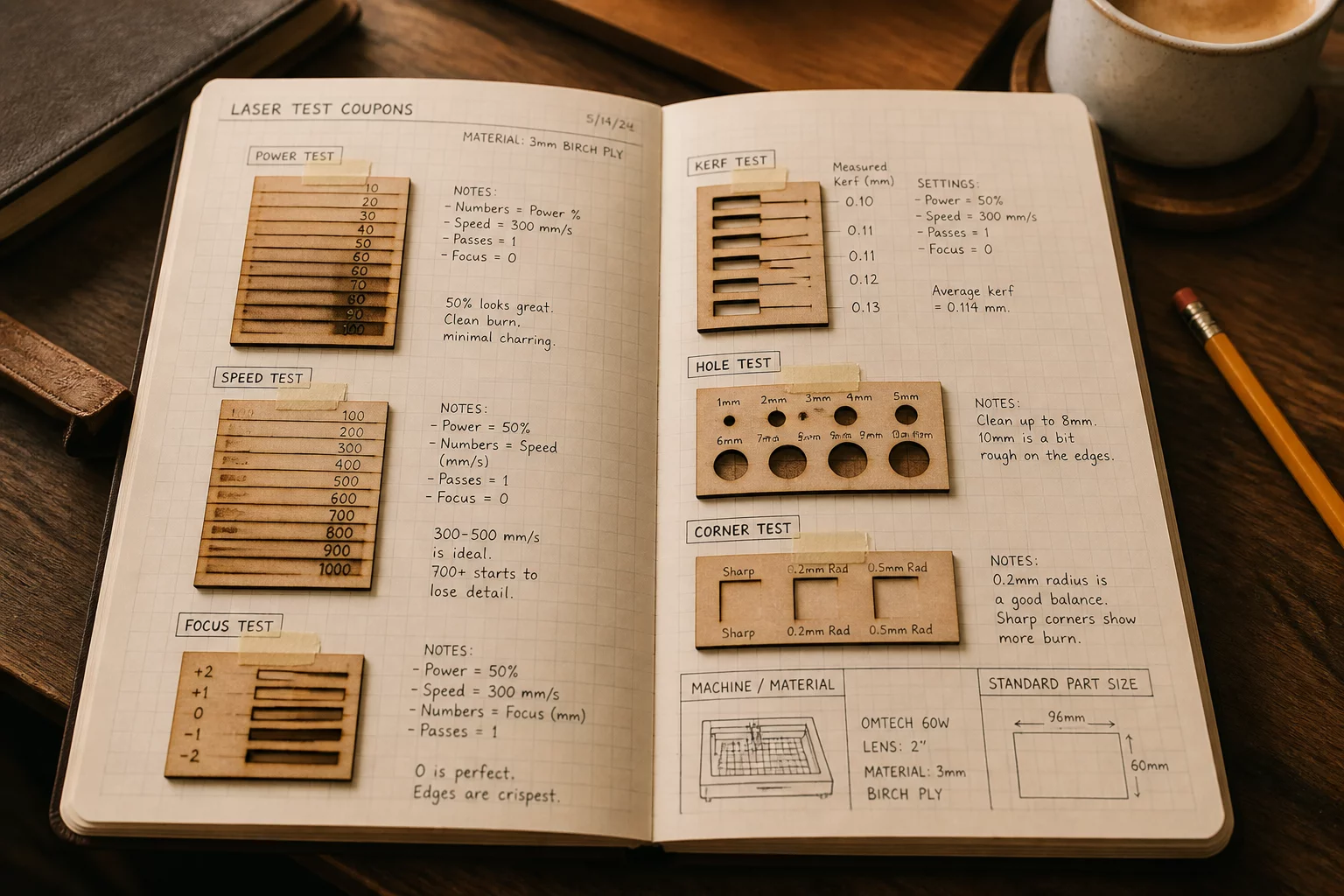
Structuring a repeatable workshop notebook of material batches, power settings, and measured offsets.