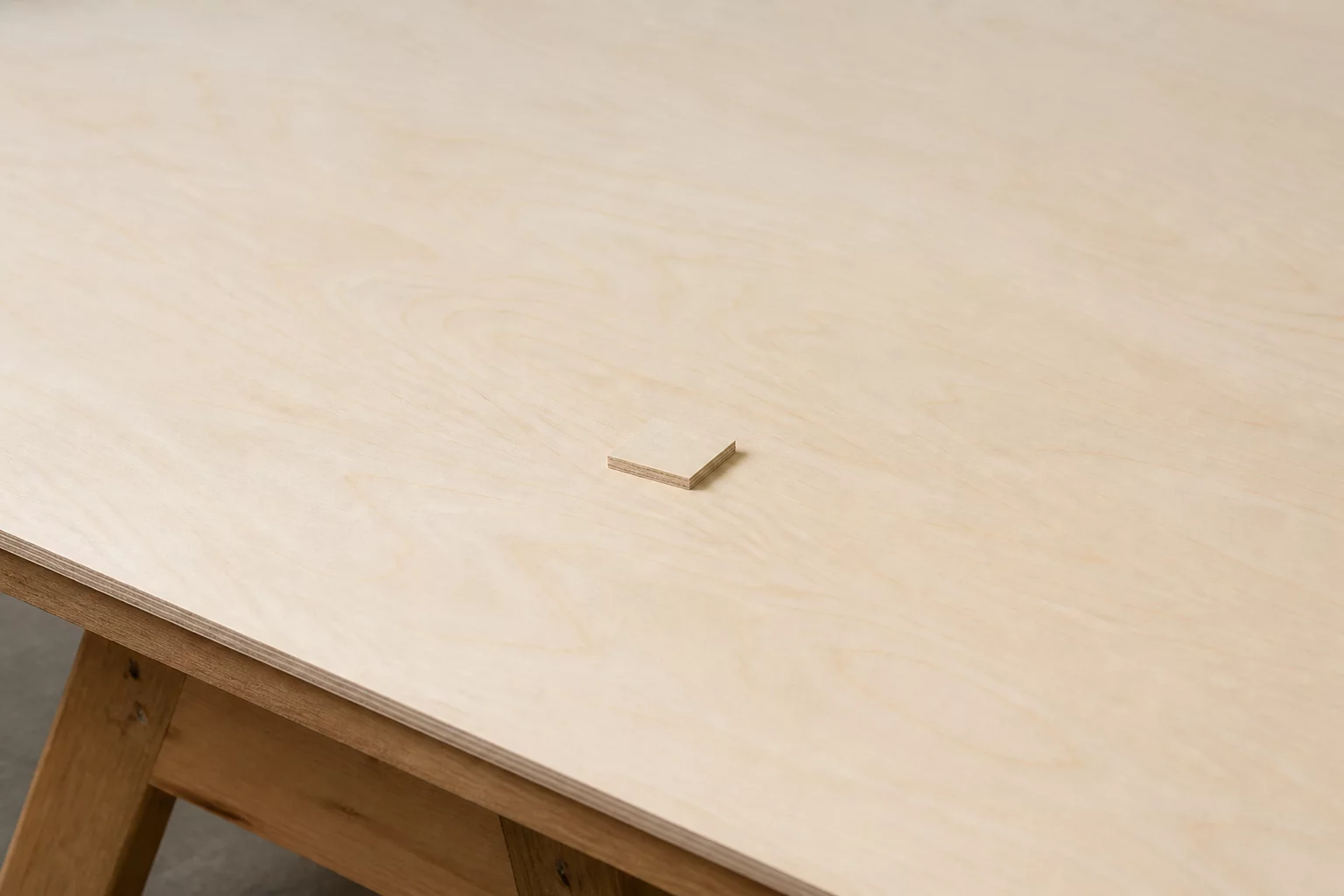
Why Macro Production Relies on Micro Validation
A single 1200 x 600 mm sheet of birch plywood represents a significant investment in raw stock and machining time. When a nested cut file containing fifty interlocking components finishes running with slots that are loose by a mere 0.10 mm, the entire batch becomes structurally unusable without messy gap-filling glues. Caliper readings taken along outer sheet edges provide an initial gauge, yet they cannot forecast how optical spot geometry, focal height slightness, and substrate charring will interact inside the laser cut path.
A micro test coupon placed within a sacrificial margin of the same workpiece resolves this uncertainty. By cutting five stepped female slots alongside one mating tab, technicians evaluate physical insertion, tactile friction, and corner cornering integrity directly at the laser bed. If the beam cuts wider than predicted due to ambient humidity or lens thermal absorption, adjustments happen immediately in LightBurn cut layer settings rather than during post-assembly triage.
Four Rules for Effective Pre-Cut Coupon Testing
- 01
Cut Directly on the Target Sheet
Never test on random scrap from another batch. Core voids, moisture, and thickness vary between sheets from the same crate.
- 02
Incorporate Stepped Tolerances
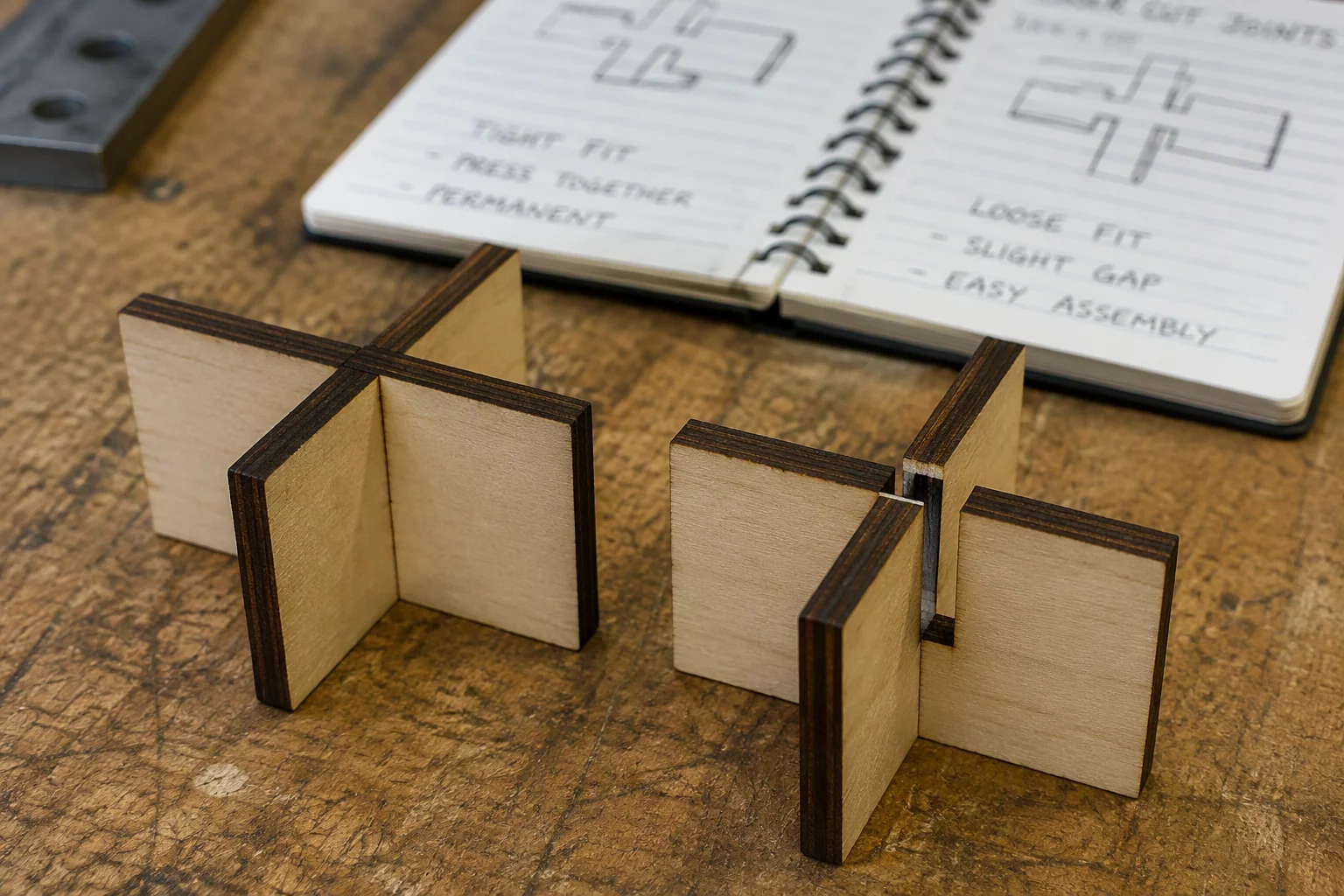
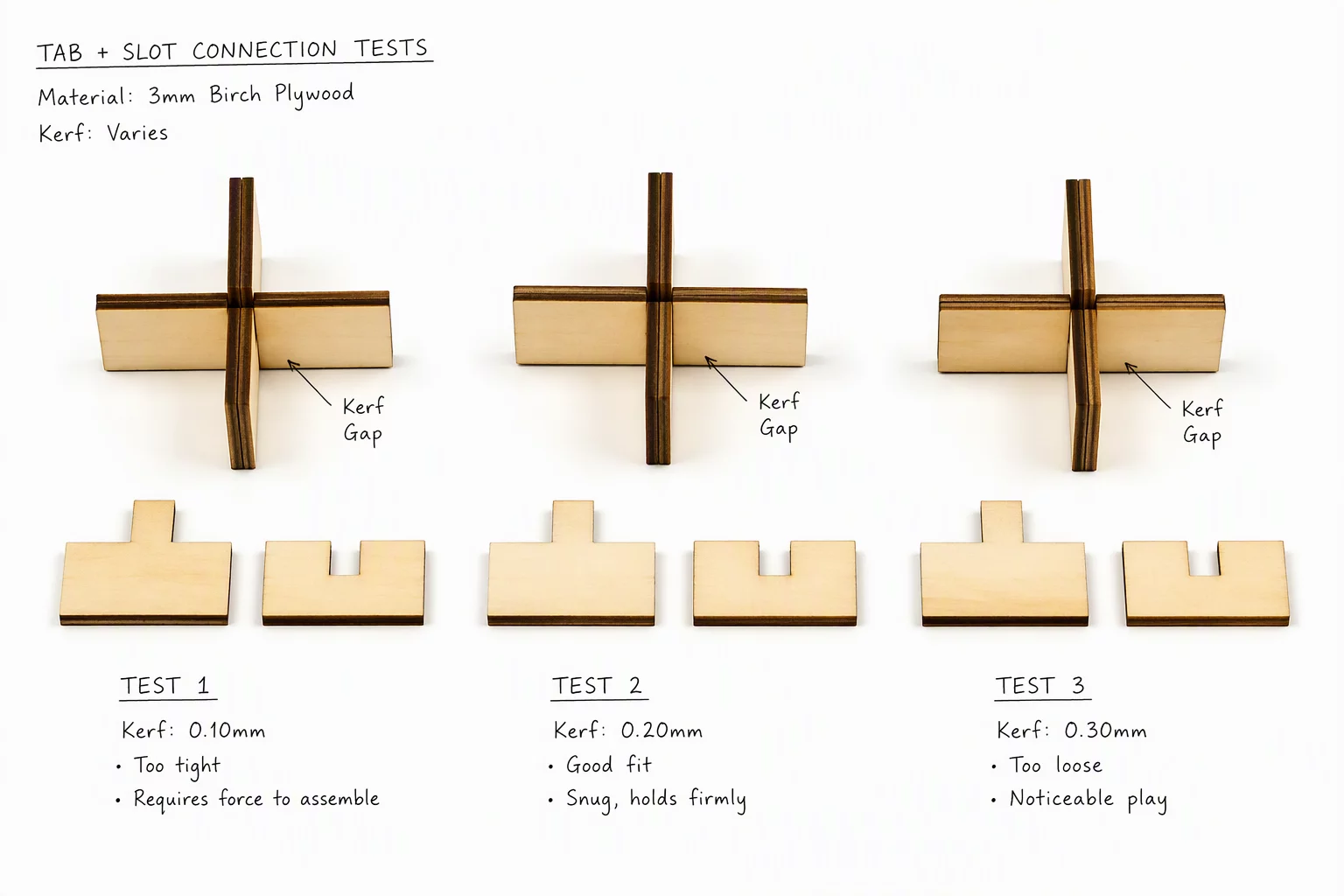
Choose a small, recorded width increment around the measured mating part. Compare insertion force and play, then narrow the next test around the promising candidate.
- 03
Evaluate Perpendicular Alignment
Insert mating tabs along both X and Y axis orientations to verify whether lens astigmatism causes directional kerf deviation.
- 04
Record Offsets in LightBurn Layers
Assign the verified kerf offset value directly to the main nesting cut layer before launching the full sheet program.
Laboratory Takeaways
Executing a compact validation coupon can reduce scrap and reveal whether a candidate joint meets its intended fit.
- Eliminates guesswork caused by nominal thickness discrepancies across raw timber lots.
- Consumes under 1% of raw sheet area while securing 100% nesting predictability.
- Verifies optical focal depth and air assist effectiveness under live production settings.
Integrating Coupon Testing Into High-Volume Runs
Set up a standardized coupon template in your CAD or LightBurn library with dimensioned labels engraved onto the coupon surface. When loading a fresh sheet of stock onto the honeycomb bed, run the coupon file in the outermost margin using identical power, speed, and assist air pressure settings as the planned production job. After cutting, remove the male tab and test fit each slot by hand.
If one candidate seats by hand without damaging the edges, repeat it with the same mating part. Record that geometry and setup as a candidate for this batch; use a confirmation coupon before changing the full project. A new batch or changed setup calls for another test.

Laboratory Comments
Riley
Fabrication SpecialistSmall coupons save so much material.
Leave a Laboratory Note
Share technical feedback or empirical observations regarding laser kerf compensation.