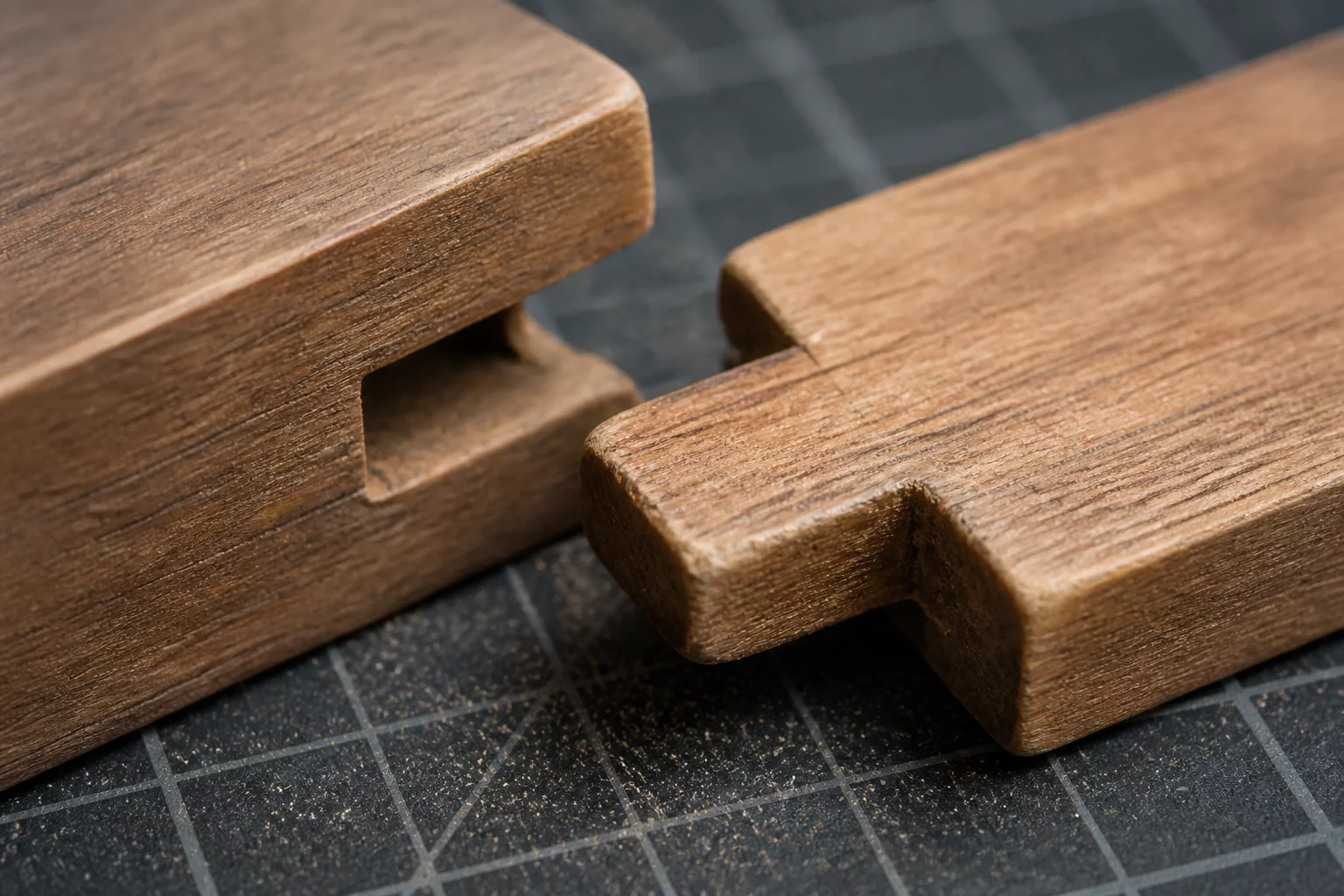
The Mechanics of Joint Relaxation After Multiple Insertions
When friction-fit tab and slot connections are pressed together for the initial cycle, microscopic wood fibers on the cut edge compress under localized stress. In laser cutting, this interface retains a thin carbonized boundary layer resulting from thermal ablation. During initial insertion, this brittle charred crust breaks away, creating an immediate dimensional shift that widens the operational clearance between mating faces.
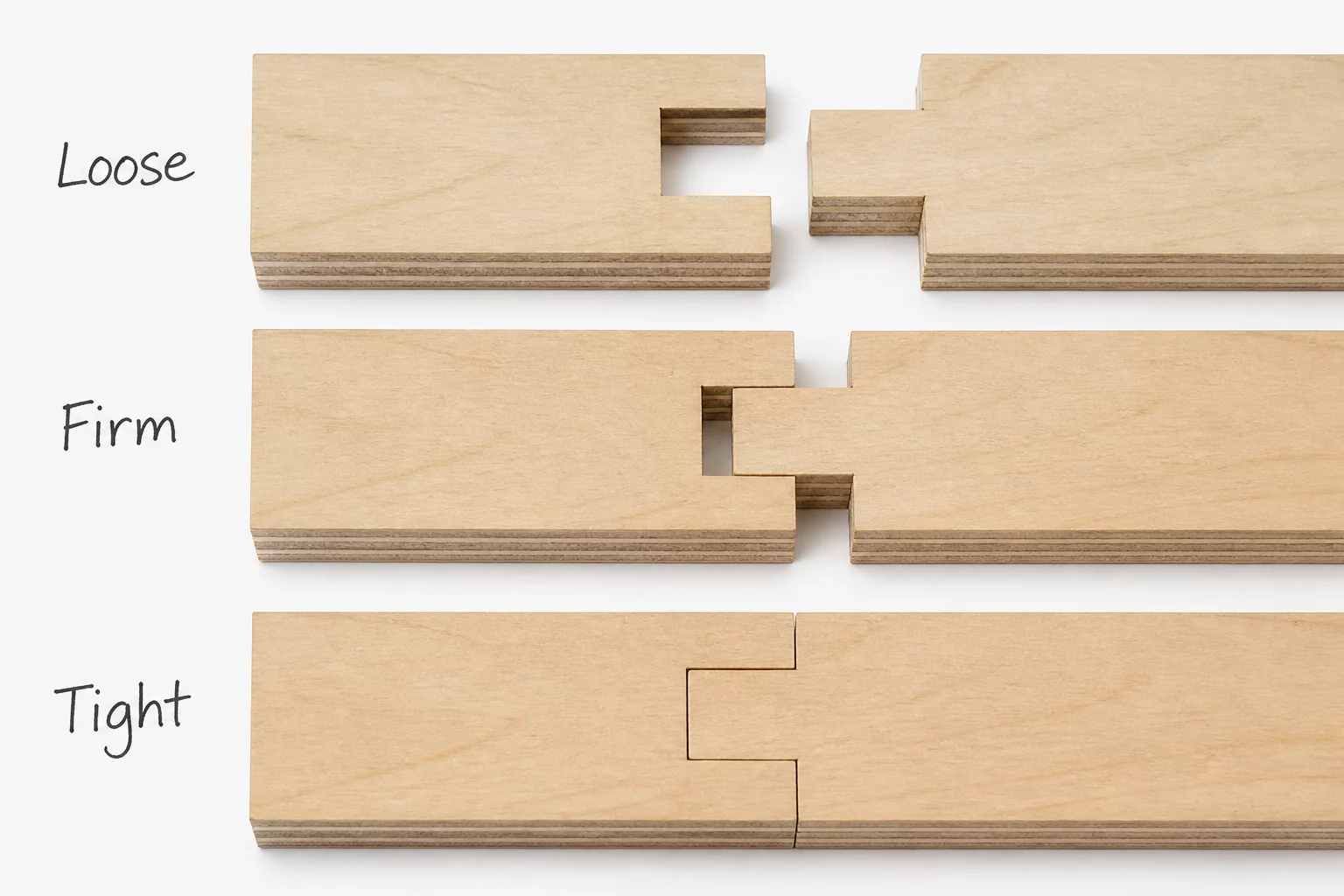
Across consecutive insertion cycles, the joint transitions from elastic compression into permanent plastic deformation. In our standard 3.0 mm Baltic birch plywood test batch, interference fits with an initial negative clearance of -0.05 mm degraded to a neutral fit after just 8 assembly cycles, developing a noticeable +0.08 mm free play by cycle 35. Understanding this wear curve is vital when designing reusable flat-pack enclosures and modular fixtures.
Consult our standardized cutting guidelines to establish ideal interference values for modular vs permanent joints.
Cycle-by-Cycle Degradation Across Substrates
Wear dynamics vary dramatically across different sheet stocks. Acrylic retains rigid edge boundaries with minimal fiber compression, yet suffers catastrophic shear failure if interference exceeds 0.03 mm. In contrast, MDF exhibits severe edge crumbling after 5 cycles, causing rapid joint loosening. Birch plywood provides the most forgiving degradation profile, retaining functional friction over 20 to 30 gentle cycles before corner rounding compromises rigidity.
Key Experimental Findings
- Initial char removal accounts for 40% of total fit loosening within the first three assembly cycles.
- Baltic birch plywood tolerates up to 15 disassemblies before requiring mechanical fasteners or shims.
- Adding a 0.5 mm lead-in chamfer to tab entries reduces entry-corner fiber tear-out by more than 60%.
Design Strategies for High-Cycle Reusable Joinery
For assemblies requiring regular disassembly, relying purely on friction tabs cut perpendicular to the material face leads to premature failure. Implementing compliant spring fingers, flexure-assisted detents, or tapered wedge pins distributes mechanical deflection across a wider cross-section rather than crushing the contact perimeter.
When strict rectangular slots are unavoidable, applying a modest negative kerf compensation offset (-0.03 mm) and designing secondary locking wedges preserves long-term structural integrity without requiring extreme initial press force.
Frequently Asked Questions About Joint Wear
Laser cuts leave a thin micro-layer of charred resin and wood fiber on the perimeter. During the first few insertions, friction rubs off this brittle layer while compressive forces crush adjacent cellular walls, effectively increasing slot width by 0.04 mm to 0.09 mm.
Incorporate flexible cantilever tabs (living springs) or cross-pin locking wedges rather than pure interference fits. Additionally, add generous entry fillets and chamfers to eliminate sharp corners that peel fibers upon insertion.
Yes. Tabs cut parallel to the outer veneer grain experience higher shear splitting during insertion, whereas tabs oriented perpendicular distribute compressive stresses across alternating cross-laminated plies, prolonging wear life.

James Miller
Related Slot Tolerances

Technical Discussion
Peer Calibration NotesNo technical observations recorded yet. Be the first to share your wear cycle measurements below.
Leave a Technical Observation