Defining the True Interference Threshold
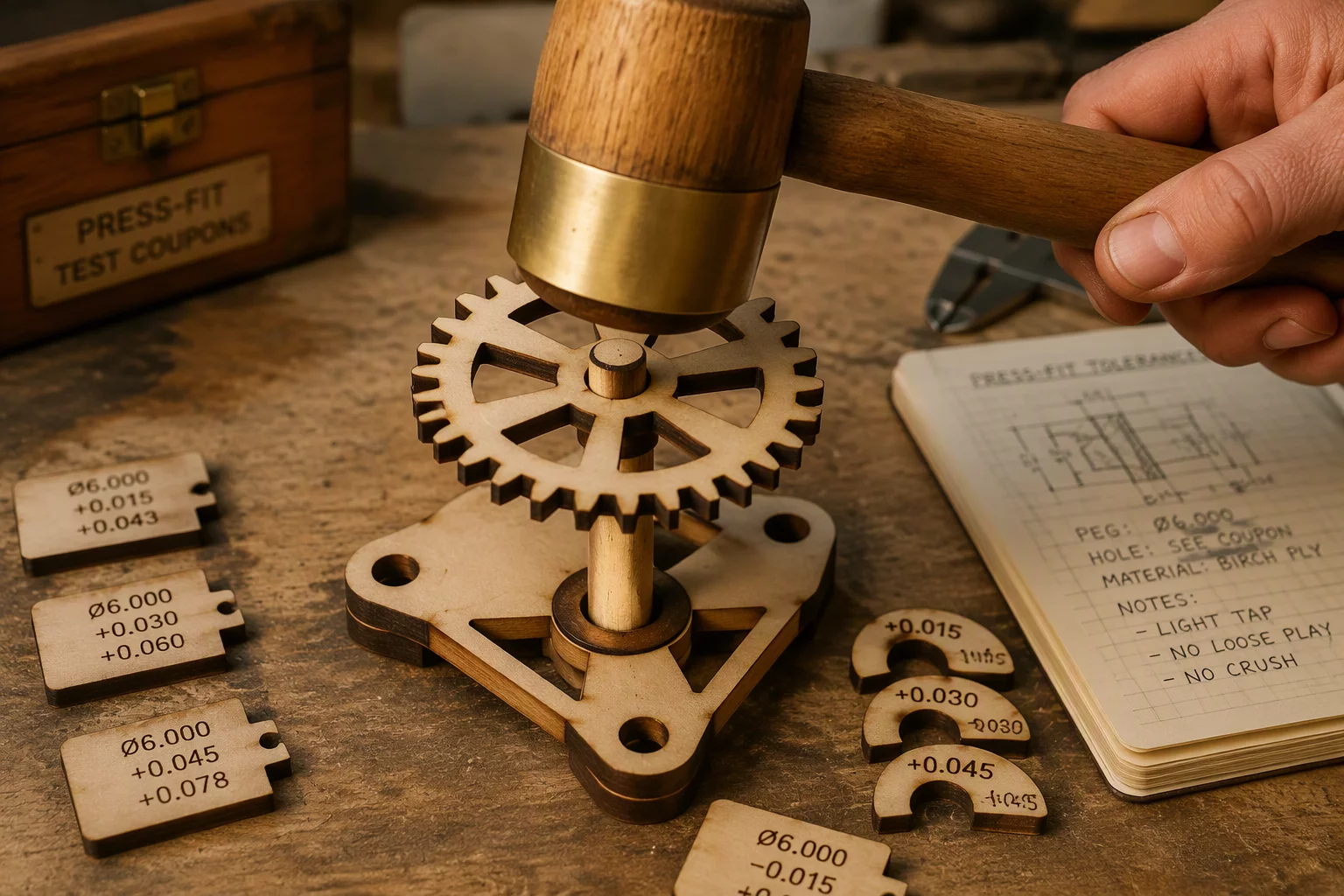
Achieving a seamless press fit without splitting sheet materials requires balancing the laser beam kerf against mechanical elasticity. In laser cutting, nominal slot dimensions never produce a real-world friction lock unless internal beam offset compensation is tuned to the exact micrometer level of edge taper.
When assembling 3mm Baltic birch or Cast Acrylic without adhesives, an interference of 0.05mm to 0.12mm provides the holding power necessary for structural stability. Exceeding 0.15mm in rigid materials almost always induces stress fractures along the outer perimeter of the slot.
Review our full laboratory methodology for calibrating focal height, spot diameter, and cutting speeds.
Material Elasticity: Plywood vs Cast Acrylic
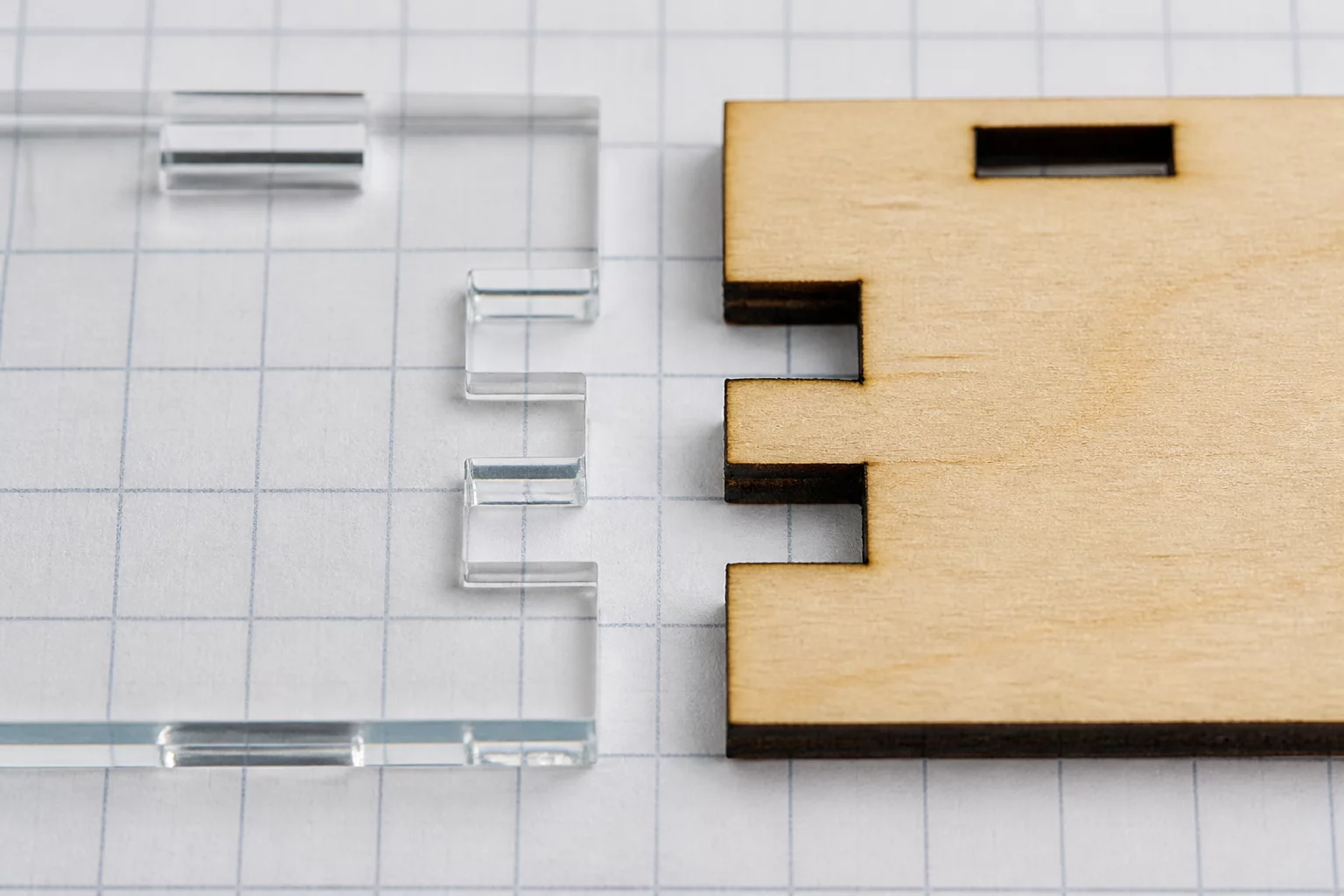
Plywood absorbs radial compression because the internal wood grain yields under localized mechanical pressure. Conversely, acrylic exhibits zero grain compliance; its glassy matrix concentrates shear force directly into the inner corner radii, requiring a much tighter tolerance window (+0.02mm to +0.04mm maximum).
Empirical Press Fit Guidelines
- Maintain an interference offset between 0.06mm and 0.10mm for Baltic birch to ensure repeated snug retention.
- Use stress-relief dogbones or fillets at slot corners to eliminate localized stress spikes in acrylics.
- Verify moisture content in organic substrates, as high humidity expands nominal core thickness by up to 0.18mm.
Calibrating LightBurn Inward and Outward Offsets
LightBurn provides dedicated kerf offset controls in the cut layer settings. Applying an outward kerf offset expands outer contours and shrinks interior holes or slots, shifting the contact interface toward optimal press-fit friction.
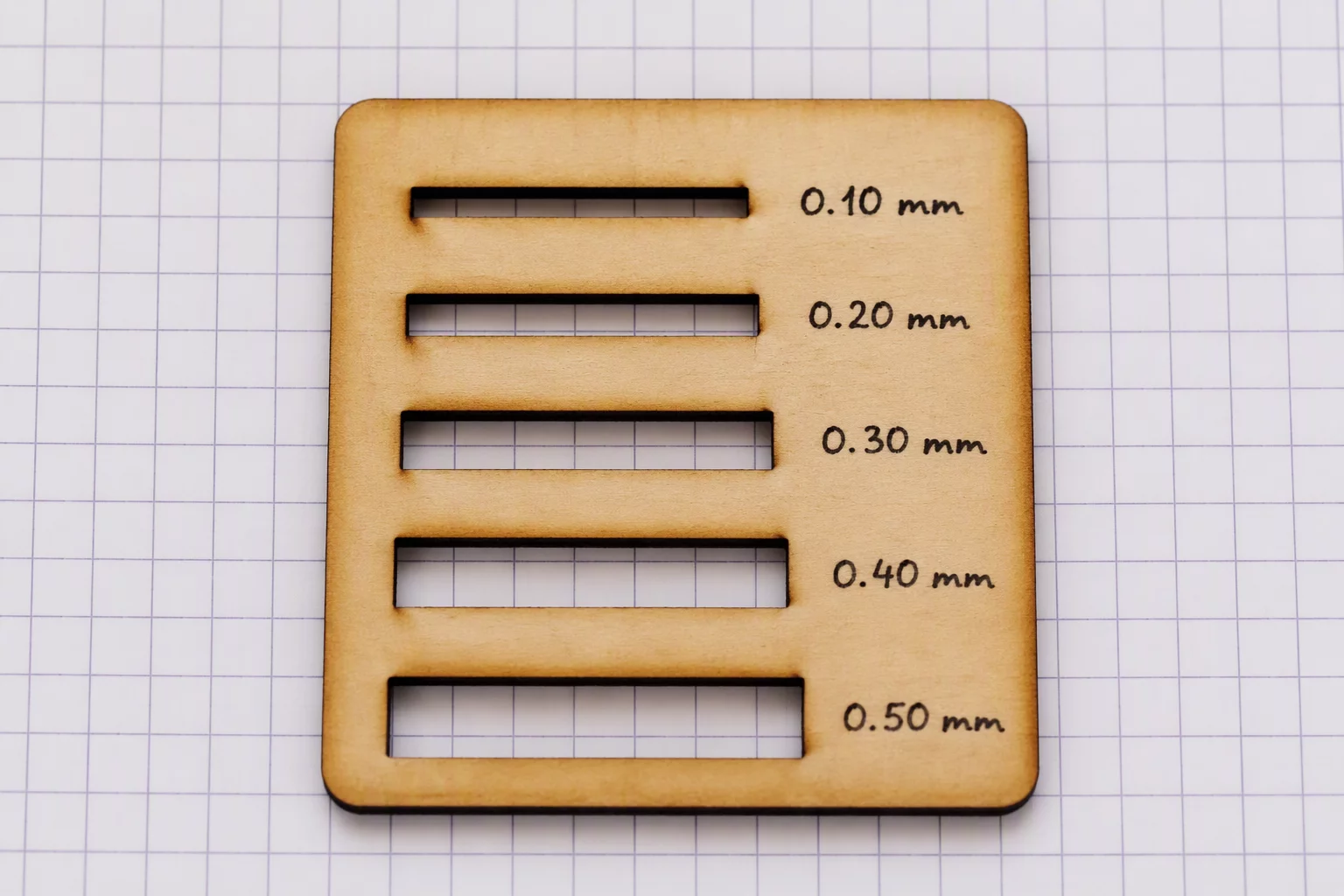
Always test a stepped gauge coupon spanning from -0.10mm to +0.10mm offset before producing final nesting layouts. Small batch differences in raw sheet thickness immediately dictate adjustments to the digital toolpath.
Common Questions on Press Fit Tolerances
For standard 3mm Baltic birch, an interference overlap of 0.06mm to 0.08mm ensures a firm finger-press fit that holds without glue while preventing the plies from delaminating.
Acrylic lacks organic elasticity and does not compress. Sharp 90-degree internal corners also act as stress concentrators; adding a small radius or dogbone cutout prevents cracking during assembly.
Because the laser beam focuses to an hourglass shape, cut edges possess a slight vertical angle (taper). Placing the tighter side of the taper toward the entering tab creates an automatic wedge effect.

Sarah Jenkins
Related Slot Tolerances
Technical Discussion
Peer Calibration NotesNo comments yet. Be the first to leave a technical observation.
Leave a Technical Observation